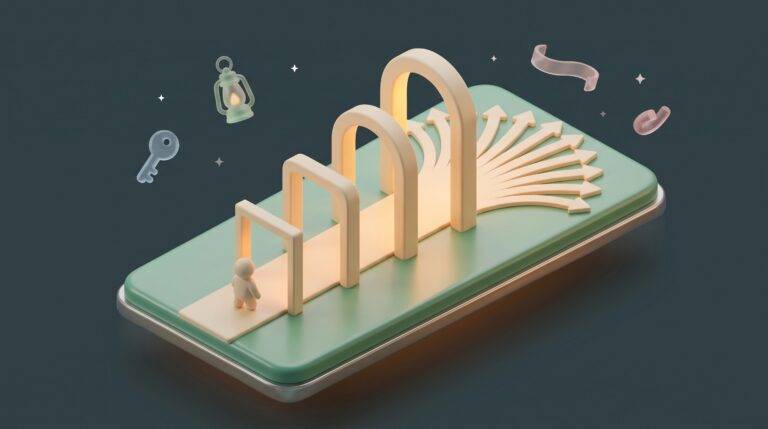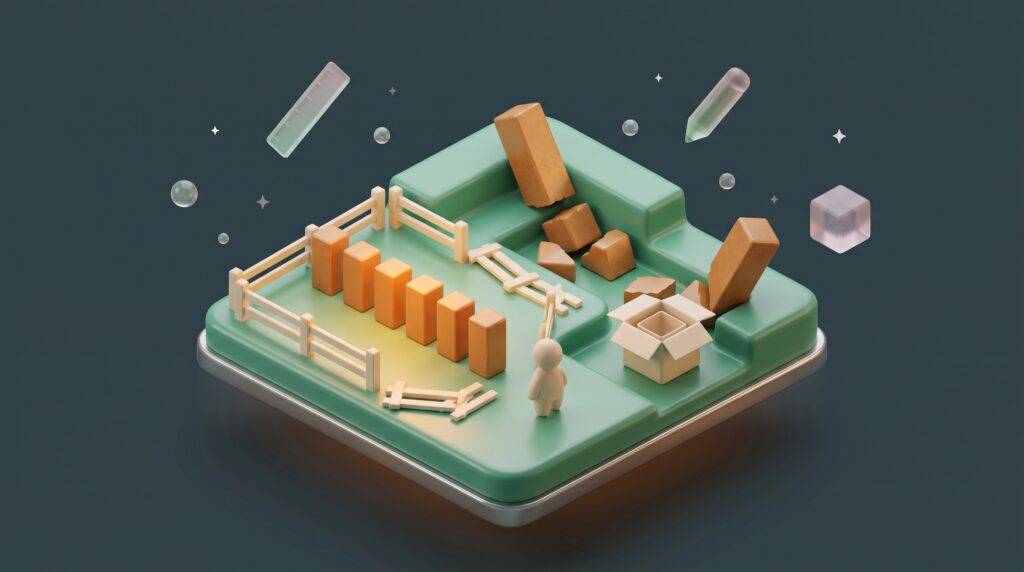
The short answer: a strong PSLE result does not predict a strong start in Sec 1 Math. The subject changes shape between the two, and the students caught out most often are the ones who did well — because the thing they were good at is no longer the thing being tested.
Parents tend to read a February dip as a discipline problem, or a secondary school that is “much tougher”. It is usually neither. Three specific restrictions are lifted at once, and nobody tells the student they are gone.
If you are reading this in February, you likely already know the shape of it. The child who came home with an AL1 or AL2 four months ago is bringing back marks in the fifties, insisting nothing has changed, and the same argument is now happening twice a week. Before that hardens into a view your child holds about themselves, it is worth knowing what actually changed.
What PSLE algebra is actually allowed to ask
Primary algebra is real, but it is deliberately fenced in. The MOE primary syllabus sets out exactly what P6 algebra may cover:
- using a letter to represent an unknown number
- simple algebraic expressions such as 3x or x ÷ 3
- simplifying simple linear expressions excluding brackets
- evaluating simple linear expressions by substitution
- simple linear equations involving whole number coefficients only
Read the two bolded phrases again, because they are the whole story. At PSLE, algebra never contains a bracket, and never contains a coefficient that is not a whole number. Neither does it involve a negative number, since negative numbers are not in the primary syllabus at all.
Within those fences, primary maths rewards something quite specific: recognising which of a known set of question types you are looking at, then running the matching method. Model drawing, the unitary method, guess-and-check, before-and-after. It is a genuine skill, and the students who score well have usually become very fast at it. Very little of it transfers cleanly to Sec 1 Math.
What Sec 1 Math removes
All three fences come down in the first term.
Brackets arrive. Expressions now need expanding before they can be simplified, which means the distributive law is suddenly load-bearing rather than decorative.
Coefficients stop being whole numbers. The Sec 1 syllabus works over rational and real numbers, so fractions and decimals appear in the places where P6 guaranteed a whole number.
Negative numbers arrive. Sec 1 Math opens with negative numbers, rational numbers and real numbers and their four operations — and every later topic assumes them silently.
Each change is individually small. Together they mean an expression can no longer be handled by recognising its shape. It has to be manipulated, term by term, with no guarantee that the intermediate steps look tidy. That is a different skill, and it is the one Sec 1 Math is really assessing.
One topic moved into Sec 1 Math, and this year’s cohort is the first to feel it
There is a change in timing worth knowing about, because it is new.
The 2021 primary mathematics syllabus applies to Primary 6 from 2026 onwards, so this year’s cohort is the first to sit PSLE under it. Under that syllabus, Speed no longer appears anywhere in the primary curriculum — the word does not occur once in the document. It has moved to secondary, where it sits in the Sec 1 topic Rate and Speed, alongside unit conversion such as km/h to m/s.
So the students entering Sec 1 Math next year will meet speed, constant speed and average speed for the first time, without the primary grounding earlier cohorts had. If your child is in P6 now, this is worth knowing before January rather than after the first test.
Why Sec 1 Math hits strong scorers hardest
This is the part parents find counter-intuitive.
A student who scored well at PSLE did so by getting very good at method recognition. That strategy has a ceiling, and Sec 1 Math is where it is met. Their instinct is to look at a question and ask “which type is this?” — and the honest answer is increasingly “none of them, just do the algebra”.
A student who found primary maths harder often never developed that reflex, and so has less to unlearn. This is why a P6 class and a Sec 1 class can reorder themselves quite noticeably within one term, and why the reordering is not evidence that anyone has stopped working.
What actually helps in Sec 1 Math
The useful intervention is narrower than most people expect. It is not more practice papers, and it is certainly not starting Sec 2 content early.
It is fluency in manipulation — expanding, collecting like terms, handling a negative sign without pausing, moving a term across an equals sign without thinking about it. This is boring to drill and almost never the thing a struggling student is given, because it looks too basic to be the problem.
It is the problem far more often than not. A student spending their working memory on the manipulation has none left for the actual question, which from the outside is indistinguishable from not understanding the topic.
It also compounds. Weak algebra in Sec 1 Math becomes weak algebra in Sec 2, which is where the A Math decision is made — and that decision, taken on Sec 2 results, determines whether A Math is offered at all.
What we would tell you in person
A drop in the first term of Sec 1 Math is common, recoverable, and rarely about effort. Before concluding your child has hit a ceiling, check whether they can manipulate an expression with a bracket and a negative coefficient without slowing down. If they cannot, that is the whole problem, and it is a term’s work to fix.
What you are trying to get back is not the mark. It is the version of your child who used to put their hand up.
If you would like a second opinion on where your child currently stands, that is what a trial lesson is for. We will tell you straight.
APMC Learning Centre teaches primary maths and Secondary 1 Math in Woodlands, in classes of no more than eight with two tutors in the room.